
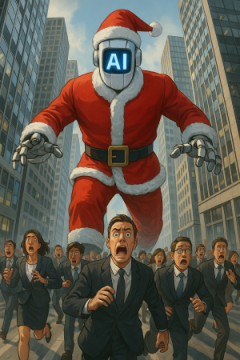
 As snow gathers and holiday lights appear on rooftops, many reflect on career moves for the coming year. The AI impact on the job market is no longer distant speculation. It’s accelerating now, and its effects are rippling through industries as we approach the new year.
This December finds professionals weighing stability while companies adopt AI-driven tools to cut costs and automate tasks. Forecasts suggest millions of jobs are vulnerable to automation, and organizations across sectors are already reshaping teams to integrate these tools. The season of hope may also require strategic rethinking.
The disruption is already here
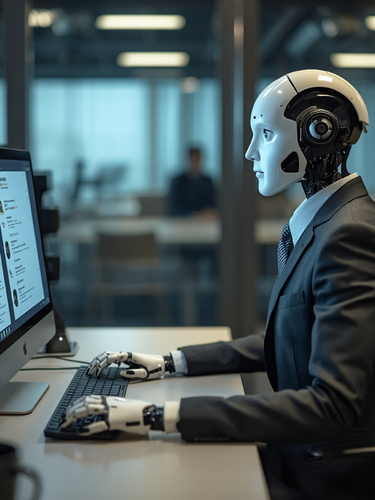
White-collar industries such as clerical support, customer service, data processing, and routine financial operations are seeing early signs of decline. Tasks once managed by entry-level employees are increasingly absorbed by AI systems. Call centers are turning to chatbots. Scheduling, invoicing, and even basic analysis are being offloaded to automation.
Creative and marketing roles, long considered relatively safe, are also under pressure. Content production, graphic design, and digital advertising are now partially automated, leading to shifts in team structures. What once required a full team may now be managed with half the staff and a suite of AI tools.
Why this shift is different from the past
Unlike prior waves of disruption, AI does not rely on human labor to scale. During the Industrial Revolution, machines displaced workers, but they also created new industries and required people to build, maintain, and operate them. Jobs were lost, yes—but others were born.
AI behaves differently. It replicates knowledge work without needing much human oversight. Entire workflows can now be executed without adding personnel. That’s a stark contrast to prior innovations, which increased productivity but also increased demand for human labor.
If this trend holds, the economy may face a future where efficiency improves but job creation stalls. Fewer people will be needed to do more work, and not all displaced workers will find new lanes of opportunity in the same industries.
What professionals should do now
Assess your risk level
Evaluate how exposed your role or field is to AI. If your job involves rules-based processes, repetitive decision-making, or pattern recognition, it’s likely on the radar for automation.
Focus on human-centric skills
Skills that rely on emotional intelligence, negotiation, critical thinking, creative judgment, and people leadership are harder to replicate. These are your best bets for long-term resilience.
Diversify your skill set
Explore new tools, certifications, or disciplines that blend with your current experience. Digital literacy, cross-functional collaboration, and project management are all growing in value.
Build a flexible portfolio
Consulting, fractional roles, freelancing, and contract-based work create career flexibility and open new income streams. The traditional single-employer path may not be the only—or best—route forward.
Stay connected
Professional relationships matter more when systems are in flux. Referrals, reputation, and trust help professionals stay top-of-mind when companies make quick shifts.
Show measurable impact
Clearly document how you add value—through revenue, cost savings, efficiency gains, or client results. When companies streamline, those with visible impact are harder to cut.
Rethink your trajectory
If your field is undergoing major change, consider whether it’s time to pivot. Roles in trades, healthcare, infrastructure, and human services may offer more durability in an AI-heavy economy.
Hope with awareness this holiday season
This holiday season offers more than rest and renewal—it is a chance to take stock and prepare for the future. The job market is being reshaped in real time. While it’s easy to feel overwhelmed, those who act early, stay informed, and keep evolving will be best positioned to adapt.