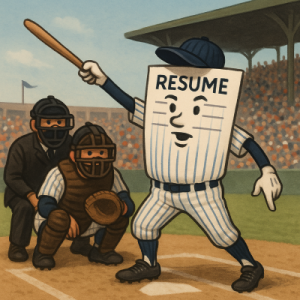

 Most people think a resume succeeds because it contains the right qualifications. Resume psychology suggests something more nuanced. Long before a hiring manager evaluates accomplishments or compares technical skills, the brain has already begun making judgments about organization, credibility, effort, and professionalism. And those first impressions will influence everything that follows.
That reality explains why two candidates with remarkably similar backgrounds often receive very different responses. The difference frequently has less to do with experience than with how easily the information is processed.
Understanding the psychology behind resume reading changes the way a resume should be written. Instead of viewing the document as a chronological record of employment, it becomes a carefully organized communication tool designed for readers who make dozens of rapid decisions every day. Recruiters, hiring managers, and executives aren’t simply reading resumes. They’re filtering information through cognitive shortcuts that help them manage an overwhelming volume of applications.
Research from LinkedIn continues to show that hiring has become increasingly skills-focused, while employers also evaluate evidence of adaptability, measurable impact, and career progression. At the same time, the hiring process remains constrained by time. Every additional second required to locate important information creates friction, and friction often translates into lost opportunities.
Instead of thinking of it as unfair, just think of it as human nature.
The Human Brain Is Built to Simplify Decisions
Imagine walking into a grocery store containing 50,000 products. No one studies every package before placing an item into the shopping cart. Instead, shoppers rely on recognizable brands, familiar colors, packaging, and previous experiences to narrow the field almost instantly.
Resume reading follows a remarkably similar pattern. They process hundreds of resumes each week, sometimes within a single day. Rather than conducting an exhaustive review from the opening line through the final page, they begin by searching for recognizable clues that answer a handful of questions.
Can this person perform the job? Does this background appear credible? Is there evidence of increasing responsibility? Will additional reading likely confirm my initial impression?
Those questions may not be consciously articulated, yet they shape nearly every hiring decision. Behavioral economists describe this process as heuristic decision making. Faced with limited time and excessive information, people develop mental shortcuts that reduce cognitive effort while still producing reasonably accurate decisions.
A resume either supports those shortcuts or fights against them.
When Information is Easily Consumed, We Tend Have More Confidence In It
Psychologists use the term cognitive fluency to describe information that is easy for the brain to absorb. Content requiring less mental effort generally feels more trustworthy, more organized, and more believable.
Studies have shown that people often perceive statements written in easier-to-read fonts as more credible than identical statements presented in difficult typography. The information hasn’t changed. Only the reader’s experience has.
The same effect appears throughout the hiring process. Dense paragraphs, inconsistent formatting, unnecessary graphics, oversized blocks of text, and confusing chronology all increase cognitive load. Every single interruption will force the reader to stop interpreting accomplishments and begin figuring out where information is located.
Even exceptional experience becomes harder to appreciate when presented through unnecessary complexity.
Strong resumes create an entirely different reading experience. They establish visual consistency, logical progression, balanced white space, and concise accomplishment statements that naturally guide the reader from one section to the next. Instead of decoding the document, recruiters remain focused on evaluating the candidate.
Think of it as the difference between driving on a well-marked highway and navigating unfamiliar city streets without signs. Both routes may reach the same destination, but one requires substantially less mental energy.
You Need to Get Their Attention Before Getting Their Interest
Many candidates assume recruiters begin reading with equal attention from the first word through the last. But experience will suggest otherwise.
Readers quickly scan for recognizable anchors before deciding whether deeper reading is warranted. Job titles, employer names, measurable achievements, industry keywords, promotions, certifications, and recent accomplishments become visual landmarks that guide attention across the page.
This scanning behavior aligns with eye tracking research conducted over many years in usability and information design. Readers naturally seek patterns before committing to detailed reading. Once confidence develops, they slow down. Until then, they continue searching for evidence that additional attention is justified.
This has profound implications for resume writing. Important accomplishments should never remain buried inside lengthy paragraphs or positioned where they compete with less valuable information. Career-defining achievements deserve immediate visibility because they influence whether the remainder of the document receives careful consideration.
Every resume communicates in two ways simultaneously. The first one is through the words themselves. The second is from structure, organization, emphasis, and presentation. And that second way often determines how well the first one gets through.
The Power of Confirmation Bias
Psychologists have long documented confirmation bias, the tendency to interpret new information in ways that reinforce initial impressions. Once readers form an early opinion, they unconsciously begin searching for evidence that supports it. And hiring decisions are not immune to this tendency.
Suppose the opening section communicates executive presence, measurable impact, and progressive leadership. As recruiters continue reading, subsequent accomplishments often reinforce those positive expectations. Conversely, if the opening feels unfocused or disorganized, later achievements must overcome skepticism that never needed to exist.
This doesn’t mean readers intentionally ignore evidence. Rather, first impressions create a framework through which later information is interpreted.
That is why experienced resume writers devote significant attention to the opening third of the document. A compelling executive summary, carefully selected competencies, and strategically positioned accomplishments establish a positive framework that influences everything that follows.
Credibility Is Often Inferred Before It Is Proven
So, every resume asks the reader to believe something, right? Sometimes it is obvious. A candidate claims to have transformed operations, increased revenue, reduced costs, or built high-performing teams. Other times the message is bit more subtle, suggesting leadership potential, technical expertise, or readiness for greater responsibility.
But either way, the reader immediately begins looking for supporting evidence.
The evidence rarely comes from a single achievement. Instead, credibility develops through accumulation. Consistent promotions, increasing scope of responsibility, recognizable employers, successful projects, industry certifications, and measurable business results work together to create a believable professional narrative. These elements should reinforce one another.
The opposite also holds true. Vague statements, inflated language, unsupported superlatives, or sweeping claims without evidence force readers to question what they’re seeing. Once doubt enters the evaluation process, every subsequent accomplishment receives greater scrutiny.
This is one reason quantified achievements remain so persuasive. Numbers provide context that descriptive language alone cannot.
Saying a manager “improved operational efficiency” leaves room for interpretation. Explaining that the manager reduced inventory carrying costs by 18%, shortened production lead times by two weeks, or oversaw a department of 150 employees gives the reader something concrete to evaluate. Specificity lowers uncertainty, and lower uncertainty makes information easier to accept.
Now, that doesn’t mean every bullet requires a percentage or dollar figure. Many worthwhile contributions can’t be measured precisely, and inventing metrics can undermine the credibility factor. The goal is simply to provide enough context that readers can appreciate the significance of the accomplishment without making assumptions.
Decision Fatigue Changes How Resumes Are Read
Few candidates consider what happens before their resume reaches a recruiter’s screen.
By mid-afternoon, many hiring professionals have already reviewed dozens of applications, answered emails, attended meetings, spoken with hiring managers, and coordinated interviews. Mental energy becomes a finite resource.
Behavioral research has repeatedly shown that decision quality can decline as people make successive choices throughout the day. Psychologists refer to this phenomenon as decision fatigue. It doesn’t mean recruiters become careless. It means the brain naturally looks for ways to conserve effort when processing additional information.
A resume that requires excessive interpretation places yet another demand on an already taxed cognitive system. But one that communicates quickly has an immediate advantage.
This helps explain why concise writing consistently outperforms verbose descriptions. Readers appreciate documents that answer their questions before they have to ask them. Every unnecessary sentence competes with information that genuinely strengthens the candidate’s case.
Good editing, therefore, isn’t simply about saving space. It’s an act of consideration for the person making the hiring decision.
Applicant Tracking Systems Filter. Humans Decide.
Discussions about applicant tracking systems sometimes create the impression that resumes exist primarily for software. That perspective overlooks an important reality.
An ATS is designed to organize and retrieve information. The the all-important interview decision still belongs to people.
According to LinkedIn’s Future of Recruiting research, employers continue placing greater emphasis on verified skills and demonstrated capabilities as hiring practices evolve. Technology helps identify qualified candidates, but human reviewers ultimately determine whether the experience presented aligns with the role and the organization’s needs.
This matters because some resumes become overloaded with keywords in an attempt to satisfy automated systems. But trust me, your readers notice this.
When keywords interrupt natural language or appear disconnected from actual accomplishments, the document comes across as manufactured. The strongest resumes integrate relevant terminology into meaningful descriptions of work performed, allowing both software and human readers to recognize genuine expertise.
Think of keywords as road signs rather than decorations. They help direct attention, but they should always lead somewhere worthwhile.
Pattern Recognition Drives Faster Decisions
Experienced recruiters develop an instinct for identifying career patterns. They notice progression from individual contributor to supervisor to director and recognize increasing budget responsibility, expanding geographic scope, growing team size, or movement into more complex assignments. This tends to communicate professional development without ever stating it explicitly.
Conversely, unexplained gaps, abrupt role changes, inconsistent job titles, or disconnected accomplishments create questions that interrupt the reader’s momentum. Many of those questions have perfectly reasonable explanations, yet every unanswered question competes with the candidate’s strongest qualifications.
A well-constructed resume anticipates this. Instead of forcing readers to reconcile confusing timelines or infer missing context, it supplies enough information for the career story to unfold naturally. That doesn’t require lengthy explanations. Often, a thoughtfully chosen title, a brief contextual statement, or strategic organization eliminates uncertainty before it arises.
Readers enjoy connecting the dots. They become frustrated when they have to guess where the dots belong.
Perhaps the greatest misconception about resume writing is the belief that success depends on saying more. In practice, the opposite is frequently true. Effective resumes respect the reader’s attention by presenting the right information in the right order, allowing accomplishments to accumulate into a compelling professional story rather than competing for attention all at once.
Designing a Resume for the Way People Actually Think
Understanding resume psychology ultimately changes the objective of resume writing. The goal is no longer to document every responsibility performed throughout a career. It is to reduce uncertainty, build confidence, and make it easy for readers to recognize value before attention moves elsewhere.
That objective has become even more important as hiring volumes continue to increase. The U.S. Bureau of Labor Statistics regularly reports millions of job openings across the economy, while employers often receive substantial numbers of applications for professional positions. More applicants competing for the same opportunities means recruiters must make efficient decisions without sacrificing quality. The resumes that stand out are usually those that communicate substance with the least amount of effort required from the reader.
Candidates can improve their resumes by asking a different set of questions before sending them.
Does the opening immediately establish the level of responsibility held?
Will the most impressive accomplishments be visible within the first few seconds?
Does every section contribute evidence that supports the desired position?
Have unnecessary words been removed without sacrificing meaning?
Would someone unfamiliar with my industry understand why this work mattered?
These questions place the reader at the center of the writing process. Not you.
This leads to meaningful improvements because your executive summary become more focused, accomplishment bullets become more specific, older experience receives appropriate emphasis without overwhelming recent achievements, and technical skills become easier to locate. That career progression becomes easier to recognize.
Collectively, those refinements reduce cognitive friction while increasing confidence in the candidate.
Another overlooked principle is consistency. When formatting, tone, verb tense, capitalization, spacing, and writing style remain consistent throughout the document, readers subconsciously interpret that consistency as evidence of professionalism and attention to detail. Small inconsistencies rarely eliminate a candidate from consideration on their own, yet they introduce distractions that serve no positive purpose.
In an effective resume, nothing will feel exaggerated or hidden. Every section reinforces the same professional identity through facts rather than lofty claims.
Experience Still Matters. Presentation Determines Whether It’s Appreciated.
Candidates sometimes worry that improving the presentation of a resume somehow diminishes the importance of their experience. But my experience is that the opposite is true. Strong presentation allows strong experience to receive the attention it deserves.
Imagine walking through a museum where every painting hangs at a different height, labels are missing, lighting changes from room to room, and exhibits appear in random order. The artwork itself hasn’t changed, yet appreciating it requires unnecessary effort.
A well-written resume functions more like a thoughtfully curated gallery. Every accomplishment has an appropriate place. Each section builds naturally upon the previous one. The reader spends time evaluating the work instead of trying to understand the presentation. That is exactly where candidates want hiring managers to spend their attention.
Psychology Will Always Be Part of Hiring
Technology will continue to evolve. Artificial intelligence will become more sophisticated. Applicant tracking systems will become smarter, and recruiting workflows will undoubtedly change.
Human decision making, however, remains rooted in psychology.
People still respond to information that feels organized, credible, and easy to process. They continue forming first impressions quickly, seeking evidence that confirms those impressions, and favoring communication that respects their limited time and attention.
The best resumes acknowledge those realities without manipulating them. They present authentic accomplishments in ways that align with how people naturally evaluate information.
When you understand that principle, resume writing becomes far less about clever wording and far more about thoughtful communication.
In the end, the resumes that earn interviews are rarely the ones that say the most. They’re the ones that make it easiest for another human being to recognize genuine value and remember it after the next hundred resumes have been read.